May 2, 2023
•
Updated September 24, 2024
•
5 min read
Customer centricity
Chris Burke
Share
Scaled Agile Framework defines Business Agility as the ability to compete and thrive in the digital age by quickly responding to market changes and emerging opportunities with innovative, digitally enabled business solutions. But we can ask – WHY are we focusing on the innovations? WHO are we really working for? WHO should we always have on top of our minds?
Our main stakeholder is our CUSTOMER. While delivering our products or services we should always focus on the customers. And this focus is not the thing we can think of from time to time during our project’s realization. Customer centricity is not a temporary thing we can forget. Customer centricity is a mindset and way of working.
Customer centricity as a mindset
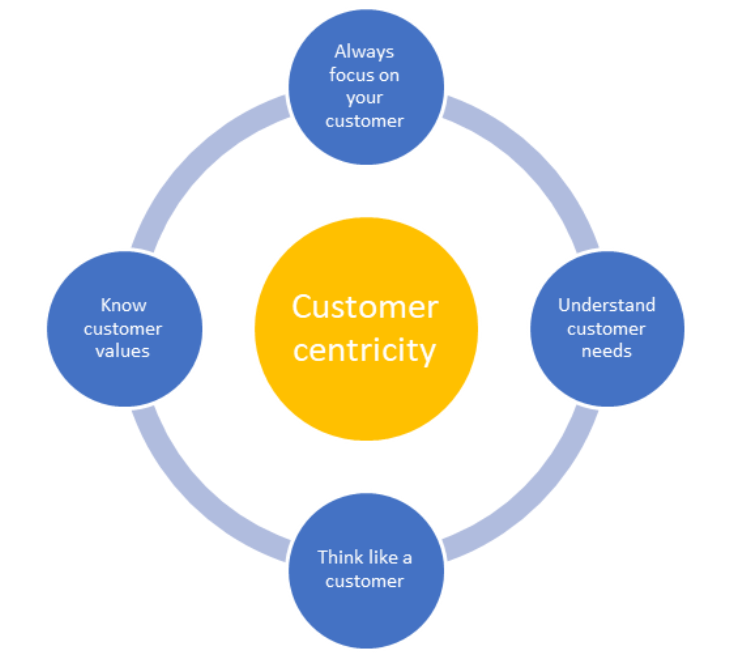
Figure 1: Customer centricity as a mindset
Every business decision made in Agile enterprise should be made with continuous considering of the impact on end-users – customers. When the company is consumer-centric, all employees have a customer centricity mindset which means that they:
Always focus on customer: on every decision, plan, release to be done customer should be the main focus of the enterprise.
Understand customer needs: to build any well-suited solution, enterprise should always question what the customers really need and want.
Think like a customer: employees should understand their customers’ point of view and try to be in “their shoes” when delivering solutions to them.
Know customers’ values: to really know the customer enterprise should focus not only on the needs but also on the values of their customers.
Customer centricity as a mindset
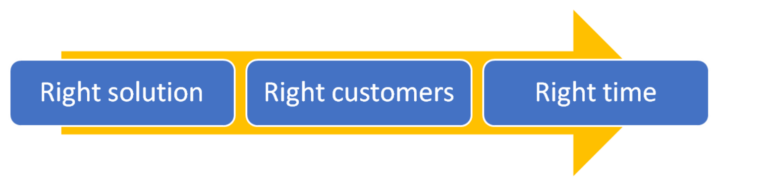
Figure 2. Agile Product Delivery goal
Agile product delivery goal can be defined as delivering the right solutions to the right customers at the right time. It seems quite easy but achieving this simple goal requires good knowledge and experience not only on the solutions/technologies the enterprise can provide. Important part of these puzzles is to identify the right customers and really get to know them.
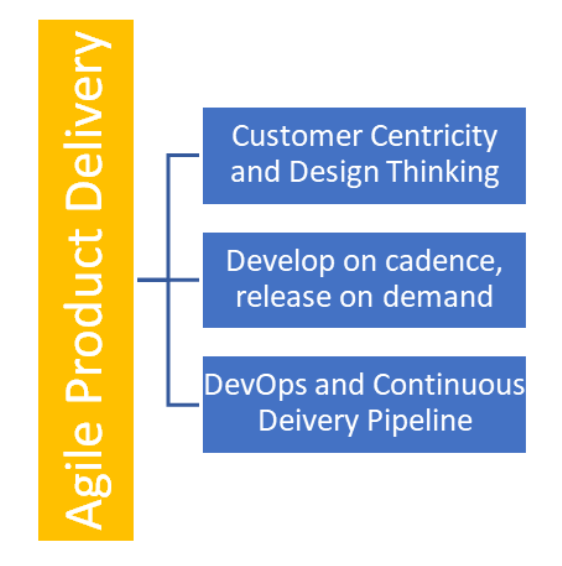
In Scaled Agile Framework there are three dimensions of Agile Product Delivery.
Figure 3. Agile Product Delivery Three Dimensions
Customer Centricity and Design Thinking: On top of the things that must be done, each enterprise should consider and implement the customer centricity mindset. Customer should be placed in the center of each enterprise decision. Design thinking process can support this.
Develop on cadence, release on demand: enterprise should continuously develop their solutions to be ready for market changes or trends in their customers’ needs. The possibility of releasing on demand ensures that new releases of value can be made exactly when customers need it and they are exactly what they need.
DevOps and Continuous Delivery Pipeline: also make it possible for enterprises to release value at any time – when customers need it and to meet market demand
Why design thinking?
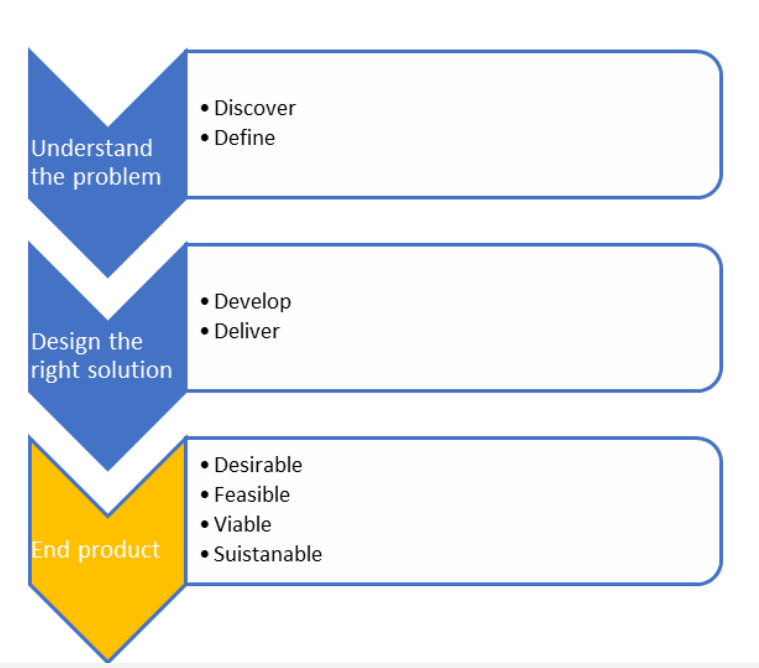
Figure 4. Design thinking life cycle
Design thinking is the process integral to customer centricity. It puts customers in the center of the approach. The process is created for the enterprises to enable them to provide solutions which are:
Desirable: they are exactly what the customers want
Feasible: the right solutions can be delivered by the enterprise with the resources that enterprise has
Viable: offered solutions create more value to the enterprise than costs
Sustainable: offered solutions are managed on account for its expected product-market lifecycle
To achieve this, the enterprise should follow two steps process which contains:
Understanding the problem: by discovering the customers’ needs and market situation and defining the opportunities for the enterprise and the solutions which the enterprise can deliver.
Design the right solutions: by developing potential solutions and then delivering the solutions to end users.
How to get to know the customers in design thinking?
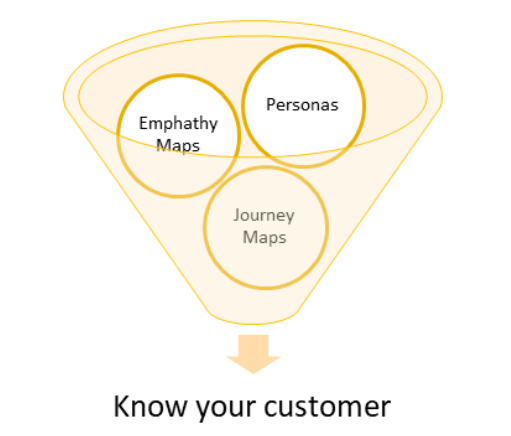
Figure 5. Sample research methods used in design thinking to know customer
Design thinking approach offers various methods which can be used in the process of getting to know enterprise customers better. If the enterprise wants to really meet the need of the customers, developing the solutions should be preceded by the research and gathering insights about the customers.
It can be achieved by using some design thinking research methods which include for example:
Personas method: when researchers create fictional consumer and/or users identified during the customer research to provide insights on customer characteristics, ways of using different products, their needs and potential engagement in the solutions that enterprise can provide.
Empathy maps: this is another method which helps to answer the questions:
Who are we empathizing with?
What do they need to do?
What do they see, say, do and hear?
What do they think and feel?
These details help the enterprise to build solutions better suited to the customers.
Journey maps: are the maps illustrating how the customer are engaging in the enterprise solutions, products and services.
Figure 6. Customer centricity best practices
Customer centricity is crucial for every business. It can be achieved, when the enterprise:
Builds a customer-centric culture: as customer centricity has to be reflected in the enterprise value and employees mindsets
Improves data: because only good quality data can help the enterprise make right decisions on the solutions offered to the customers
Captures Customers Feedback: as it is all about customers, their opinions really count
Thinks long-term: as long-lasting relationship with the customer is more valuable than a single transaction.
How Brickendon can help?
We understand that customer centricity is not a one-time practice. It is a continuous process and requires a lot of efforts of our people. This mindset is necessary for our consultants to build the solutions which are really needed by the customers and to be able to react quickly to market changes and customer needs changes.
We are all building customer-centric culture and are skilled in customer centric tools and techniques to ensure that we deliver the best solutions to the right customers at the right time.
Let us help you prepare for the coming changes
Explore the latest Insights from Brickendon and ensure that your organisation is prepared.
To provide the best experiences, we use technologies like cookies to store and/or access device information. Consenting to these technologies will allow us to process data such as browsing behavior or unique IDs on this site. Not consenting or withdrawing consent, may adversely affect certain features and functions.
Functional
Always active
The technical storage or access is strictly necessary for the legitimate purpose of enabling the use of a specific service explicitly requested by the subscriber or user, or for the sole purpose of carrying out the transmission of a communication over an electronic communications network.
Preferences
The technical storage or access is necessary for the legitimate purpose of storing preferences that are not requested by the subscriber or user.
Statistics
The technical storage or access that is used exclusively for statistical purposes.The technical storage or access that is used exclusively for anonymous statistical purposes. Without a subpoena, voluntary compliance on the part of your Internet Service Provider, or additional records from a third party, information stored or retrieved for this purpose alone cannot usually be used to identify you.
Marketing
The technical storage or access is required to create user profiles to send advertising, or to track the user on a website or across several websites for similar marketing purposes.